
The right pool coping replacement should suit your existing pool and the surrounding masonry. Start with the condition of the pool edge, then compare actual material samples. Flagstone, travertine and brick deserve consideration, but a material name alone isn’t enough to judge comfort or suitability beside the water.
At Arnold Masonry and Landscape, we design and build custom pool deck renovations throughout North Atlanta. Our swimming pool decks and renovation services include stone and brick work, with coping options that also include limestone and precast concrete. The best starting point is a plan for the pool edge and deck together, even if you’re keeping much of the existing patio.
What should you review before replacing pool coping?
Coping is the finished edge around your pool. Because it borders both the water and the deck, its appearance affects the entire pool surround.
Look beyond the color. If your existing coping has cracks or damaged sections, have the condition assessed before deciding that replacement material alone will solve the problem. A photograph is useful for an initial discussion, but it doesn’t establish the condition beneath the visible surface.
Before choosing a finish, identify what you intend to keep:
- The existing pool deck and its current layout.
- The waterline tile and its color.
- Nearby masonry walls or steps.
- The connection between the pool area and your outdoor living space.
Those decisions give the material selection some direction. Otherwise, a beautiful sample can become an awkward border beside a deck you weren’t planning to replace.
How should you compare flagstone, travertine and brick?
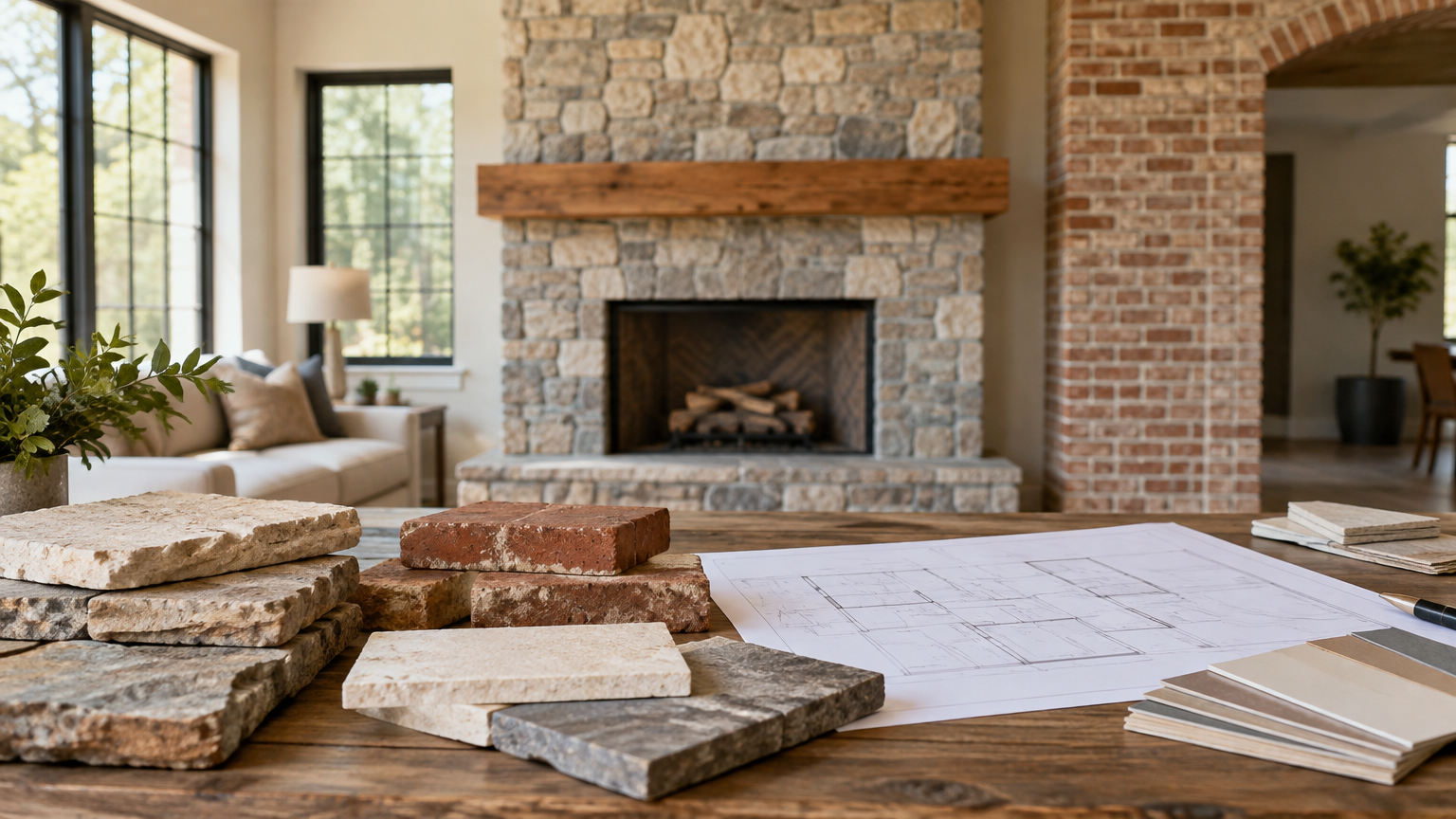
Compare the actual products proposed for your project, including their finished edges. Photos are a starting point, not a final selection.
Is flagstone right for your pool surround?
Flagstone is worth considering if you want the pool edge to relate to a natural stone patio or nearby stonework. Our masonry material selections include Crab Orchard flagstone and Pennsylvania bluestone, among other stone options.
Ask to see the proposed stone beside your existing deck. Review its surface and edge treatment, rather than choosing solely by color. If you like a natural-looking finish, decide how much variation you’re comfortable seeing across the completed pool surround.
The trade-off is visual: a strongly varied stone can become the main attraction. That may be exactly what you want, but it should be deliberate.
Where does travertine fit?
Travertine deserves a place in the design discussion if you’re considering a coordinated stone pool patio. Our brick and travertine pool renovation in Milton illustrates travertine used in an outdoor setting with brick masonry.
That combination is useful inspiration. It doesn’t mean every travertine product is suitable for every pool edge.
For a coping proposal, review the specific product and finish intended for that application. Ask how the edge will meet the adjoining deck, and compare samples with any brick or stone that will remain.
When should you consider brick?
Brick is a strong design candidate if your home or surrounding hardscape already has brickwork. Repeating it around the pool can connect the water’s edge to the architecture of the house.
You don’t have to use brick everywhere. Consider a brick border beside a stone deck, then compare that with a stone coping option. Our stone masonry and brickwork services include designs that bring both materials into outdoor living spaces.
If you’re considering a rounded brick edge, ask to see the proposed profile. The finished shape matters as much as the face color.
Which option is best for heat, wet surfaces or a saltwater pool?
Don’t accept a blanket promise that any material category is always cool, slip-proof or unaffected by salt exposure. Choose a specific product with information appropriate to its intended use.
Ask your contractor to review the proposed material’s suitability for pool coping and any care requirements. For a saltwater pool, raise that detail before material selection. Discuss cleaning and sealing requirements for the exact finish under consideration rather than assuming every natural stone needs the same treatment.
Comfort deserves an in-person check. Examine samples outdoors and discuss how the finished edge will feel where you sit or enter the water.
Should coping and deck replacement happen together?
Plan them together. Whether both need replacement depends on the condition and design of your existing pool area.
If the deck still suits your home, ask how coping replacement will affect its adjoining edge. If you’re already considering a new patio, compare the coping and deck materials as a pair before approving either.
Bring photos of the pool’s full perimeter to your consultation, along with close views of damaged areas. Include your preferred material examples and identify the parts of the pool area you want to retain. That gives the discussion a clear scope instead of starting with an isolated stone sample.
Request a pool renovation consultation with Arnold Masonry and Landscape to discuss your coping and pool deck plans.